Why Going Back to the Gym After a Long Break Feels Harder Than Starting Fresh
Coming back to the gym after months away often feels worse than walking in as a complete beginner ever did, which seems backwards but has a clear explanation. The gap between memory and current ability is exactly what makes the return harder than the start.

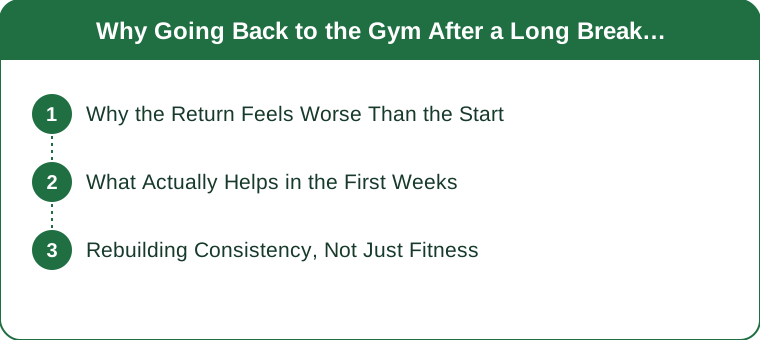
Why the Return Feels Worse Than the Start
The psychological gap: the the-memory-vs-current-ability-mismatch (the brain still holding onto pre-break strength and endurance levels as the baseline, making current, lower performance feel like failure rather than a normal reset point), the the-no-beginner-excuse-available (true beginners getting social permission to not know what they’re doing, while returners feel expected to already know, which adds pressure that first-timers don’t carry), the the-visible-detraining-effect (measurable strength and conditioning loss after even four to eight weeks off being a real physiological effect, not a personal failing, though the specific timeline varies by person).

What Actually Helps in the First Weeks
The practical reset: the the-restart-at-a-real-fraction (deliberately starting at roughly half to two-thirds of pre-break working weights or intensity, which prevents the injury risk and discouragement of trying to pick up exactly where things left off), the the-familiar-space-first (returning to a familiar gym or routine rather than switching to something entirely new at the same time, since combining two big changes at once increases the intimidation load), the the-track-return-not-peak (comparing progress against the return-day baseline rather than the pre-break peak, since that comparison is the one that actually shows improvement).
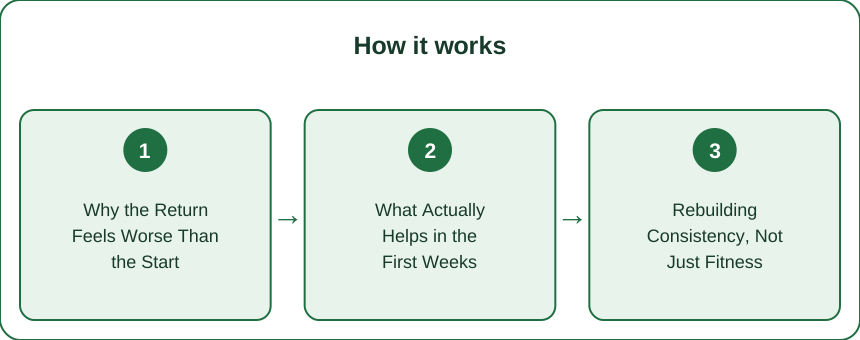
Rebuilding Consistency, Not Just Fitness
The longer game: the the-consistency-rebuilds-faster-than-expected (most people regaining a meaningful share of prior fitness faster than they regained it the first time, since the body retains some adaptation even after a break), the the-schedule-a-buffer-week (planning for at least one lower-intensity buffer week in the first month, since pushing too hard too fast is the most common reason a second attempt at returning stalls), and the frame (starting at a real fraction of old numbers and tracking from day one, not from memory, is what makes the return stick)).
It’s a common but counterintuitive experience: walking back into the gym after months away often feels more intimidating than walking in as a total beginner ever did. The difference is that the brain still holds onto pre-break performance as the baseline, so current, lower ability reads as failure rather than a normal reset, and returners don’t get the same social permission to not know what they’re doing that true beginners get. The fix is deliberately starting at roughly half to two-thirds of prior working weights, staying in a familiar routine rather than changing everything at once, and tracking progress against the return-day baseline instead of the old peak. Most people regain a meaningful share of their prior fitness faster than they built it the first time, provided the first weeks don’t try to skip that reset. Why Going Back to the Gym After a Long Break Feels Harder Than Starting Fresh has a clear psychological explanation — and a straightforward fix.
See It in Motion
Seen here: High Waist Yoga Leggings with Side Pockets — shop it on bubblelime.com
Keep Reading
This article is for general informational and styling purposes only. Fit, sizing, and product availability may vary.