The Free Weight Area Intimidation Is Almost Never About the Weights Themselves
Quick Answer: You’re not avoiding the free weights because you don’t know what to do — you probably know at least five exercises you could do right now. You’re avoiding an unusually exposed social space. The layout offers no visual cover, the audience effect makes you feel watched whether or not anyone is, and the skill gap around you is highly visible. That’s why watching more form videos never quite fixes it. Separate the learning from the exposure: practice privately or at quiet hours, then show up.
You’ve watched the videos. You could describe a proper Romanian deadlift to a stranger.
You still walked past the rack area and got on the rowing machine.
If this were a knowledge problem, more knowledge would have solved it by now.
Why Isn’t This a Knowledge Problem?
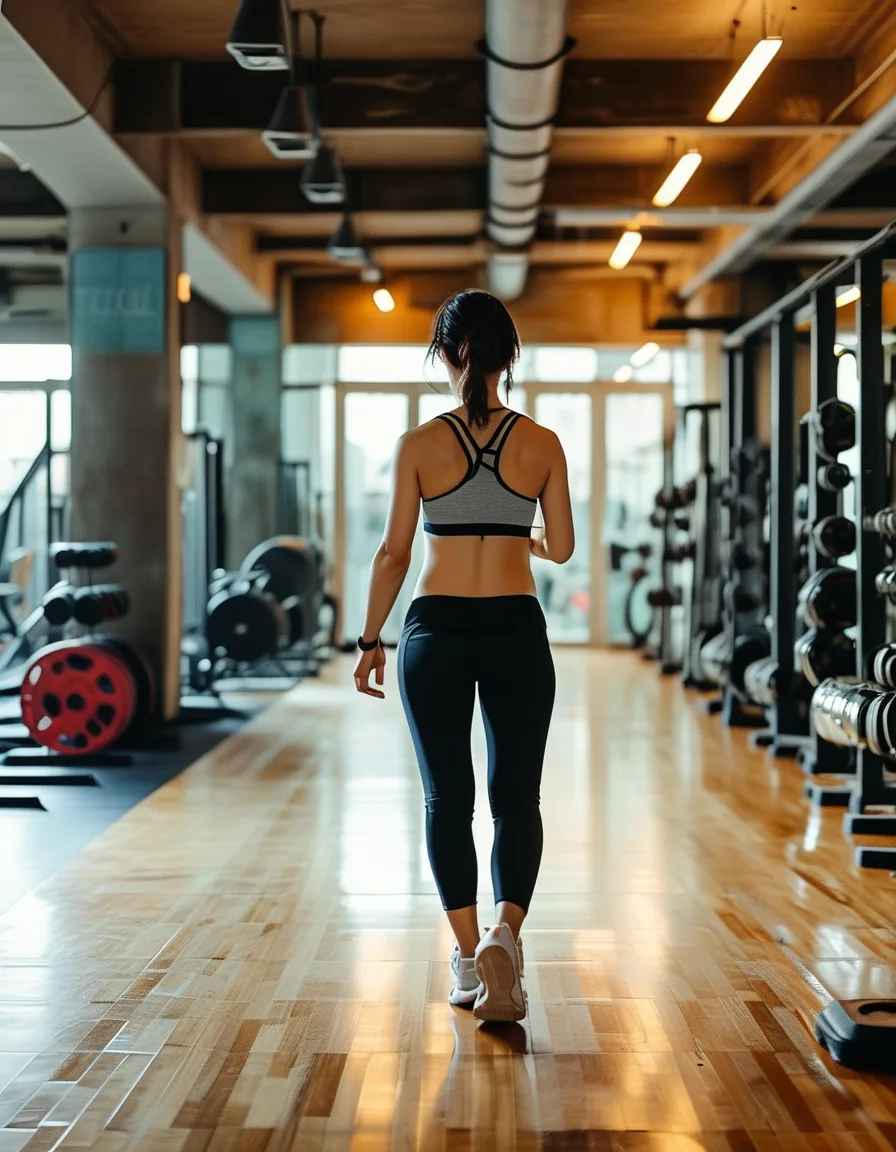
Look at the room. The free weight area is typically the most visually open section of any gym. It’s an open floor with racks and benches — almost nothing between users. The machine section, by contrast, is full of large equipment that provides real physical and visual separation. You’re partially hidden on a leg press in a way you simply aren’t in front of a squat rack.
And ask what people actually report. When people describe gym anxiety, the dominant theme is being watched and judged — not confusion about what a lat raise is. The uncertainty about exercises is real, but it consistently comes second. The bottleneck is social exposure.
This explains the pattern that otherwise makes no sense: you keep learning more, and the discomfort doesn’t move proportionally. You’ve been solving the wrong problem carefully.
What Social Dynamics Are Actually at Play?
The audience effect. This is well-documented psychology: simply believing you’re being observed measurably changes performance and increases self-consciousness — regardless of whether anyone is actually watching. In an open room full of people who could theoretically look at you, the belief runs constantly. The effect doesn’t require an actual audience, which is why “nobody’s watching you” is true and not especially reassuring.
A visible skill gap. Experienced, confident lifters concentrate in the free weight area. That’s just where the equipment they use is. The result is a section where the average visible competence is high and a newcomer stands out by direct comparison — more than in a cardio room where everyone looks roughly similar on a treadmill.
Visible mistakes cost more than private uncertainty. Not knowing what to do next is uncomfortable but private — you can stand there looking at your phone and nobody knows. Doing an exercise visibly wrong is public. The social weight of those two is completely different, and the free weight area is where the second one lives.
None of this is you overreacting. These are ordinary social psychology dynamics doing what they do in a space designed to maximize them.
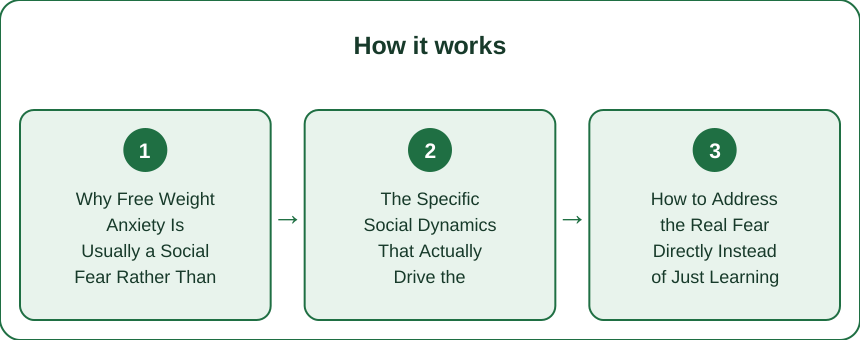
What Nobody Tells You About Fixing It
Separate the learning from the exposure. This is the core move, and it works because it addresses the actual variable. Learn unfamiliar movements at home with a dumbbell, or at the gym during genuinely dead hours — mid-morning on a weekday, or late evening. You’re not avoiding the fear; you’re doing the skill-building phase without the social load, so that when you show up at a busy hour you’re executing something familiar rather than learning in public. Two or three weeks of this changes the experience substantially.
Book a few sessions with a trainer, in that specific area. The underrated benefit here isn’t the coaching — it’s the cover. Standing in the free weight area with a trainer gives you an obvious, legible reason to be there. You’re not an unaccompanied outsider; you’re someone having a session. That reframe removes a surprising amount of the exposed feeling, and it tends to persist after the sessions end because the space is now somewhere you’ve been.
Argue with the audience effect directly. The assumption is that experienced lifters are evaluating your technique. Test it: spend one session actually watching what people do between sets. They’re looking at their phone, resting, staring at nothing, or thinking about their next set. The occasional glance around a room isn’t evaluation. The belief driving the anxiety is a factual claim, and it’s mostly false — which means you can check it rather than just trying to feel better about it.
Go at quiet hours while you build the habit. Not forever, and not as avoidance — as a reasonable ramp. Reducing the audience while the space becomes familiar is a sensible order of operations.
Mini FAQ
How long until the free weight area feels normal?
For most people, about four to six sessions actually spent in the space. Familiarity does most of the work here, and it accumulates faster than people expect.
Does going with a friend help?
Considerably, for the same reason the trainer does — you have a legitimate reason to be there and someone to talk to between sets, which breaks the sense of being alone under observation.
What if my anxiety is bigger than the gym?
If the fear of being watched and judged shows up across many situations — work, social settings, eating in public — and is limiting what you do, that’s worth raising with a therapist. Social anxiety responds very well to treatment, and gym-specific strategies aren’t the right tool for a general pattern.
TL;DR:
- The free weight area is the most visually exposed part of a gym — that’s a layout problem, not a knowledge gap.
- The audience effect means feeling watched doesn’t require anyone actually watching.
- Visible skill disparity and the high social cost of a visible mistake do the rest.
- Fix: learn movements privately or at quiet hours first, so exposure and learning don’t happen at once.
- A few trainer sessions in that specific area give you legitimacy and cover; expect 4–6 sessions to normalize it.
See It in Motion
Seen here: UPF 50+ Short Sleeve Rashguard Swim Shirt — shop it on bubblelime.com
Keep Reading
This article is for general informational and styling purposes only. Fit, sizing, and product availability may vary.